
No products added!
July 18, 2024
From Ancient Earth to Modern Elegance: The Enduring History of Terracotta
Long before the advent of fast fashion or mass-manufactured metals, there was earth, water, and fire.
Terracotta—literally translating to "baked earth" in Italian—is one of the oldest and most elemental mediums known to humanity. It is a material that tells the story of civilization itself, carrying the fingerprints of ancient artisans across thousands of years.
The Dawn of Clay Craftsmanship
The history of terracotta is as old as the discovery of fire. As early nomadic tribes began to settle, they realized that shaping river clay and baking it in open flames yielded durable, beautiful vessels and figures.
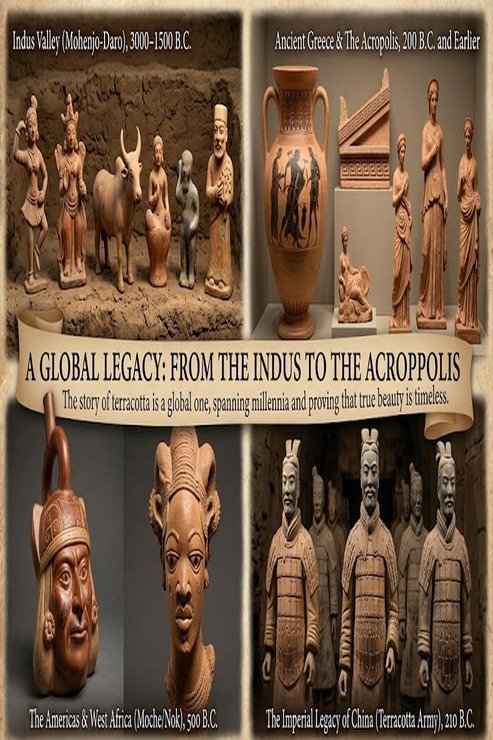
Some of the most profound early uses of terracotta were found in the Indus Valley Civilization (c. 3300–1300 BCE). Excavations at ancient cities like Harappa and Mohenjo-Daro have unearthed a treasure trove of terracotta artifacts, including intricate beads, bangles, and pendants. For these ancient people, terracotta was not just for everyday utensils; it was a revered material used to craft the very first forms of personal adornment and jewelry.
A Global Heritage
While deeply rooted in the Indian subcontinent, terracotta left its mark across the ancient world:
Ancient China: The breathtaking Terracotta Army of Qin Shi Huang, crafted in 210 BCE, stands as a monument to the material's incredible durability and capacity for life-like detail.
Ancient Greece & Rome: Artisans used terracotta extensively for architectural reliefs, vibrant pottery, and small protective deities kept in family homes.
West Africa: The Nok culture in modern-day Nigeria is famous for its highly stylized, expressive terracotta sculptures dating back to 500 BCE.
The Deep Roots of Terracotta in India
In India, terracotta never faded into antiquity; it remained a vibrant, living tradition. Across villages, the earth is still considered sacred. Artisans have spent generations passing down the techniques of molding, carving, and firing clay to create monumental temple deities, the famous Bankura horses, and exquisite festive jewelry.
Because it is made directly from the earth, terracotta is deeply intertwined with natural themes—which is why traditional Indian motifs have always featured so prominently in the craft.
A Modern Renaissance
Today, as the world turns toward mindful consumption and sustainable living, this ancient art form is experiencing a beautiful renaissance. Terracotta is the ultimate eco-friendly material—drawn from the earth and capable of returning to it without leaving a trace.
When you wear terracotta, you are not just wearing a piece of jewelry. You are wearing a piece of the earth, touched by human hands, and fired into something timeless.
At KLAV Collections, we are proud to be a part of this enduring legacy. By shaping natural clay into wearable art, we keep heritage craftsmanship alive. Our handmade pieces weave thousands of years of history into contemporary life, featuring traditional Indian motifs like intricate peacock patterns, classic Jhumka styles, floral carvings, and detailed Kundan work.
Laav
Founder, KLAV Collections